Buying Garnet Abrasive in Bulk: Supplier, Packing & MOQ Guide
News 2026-10-29 44
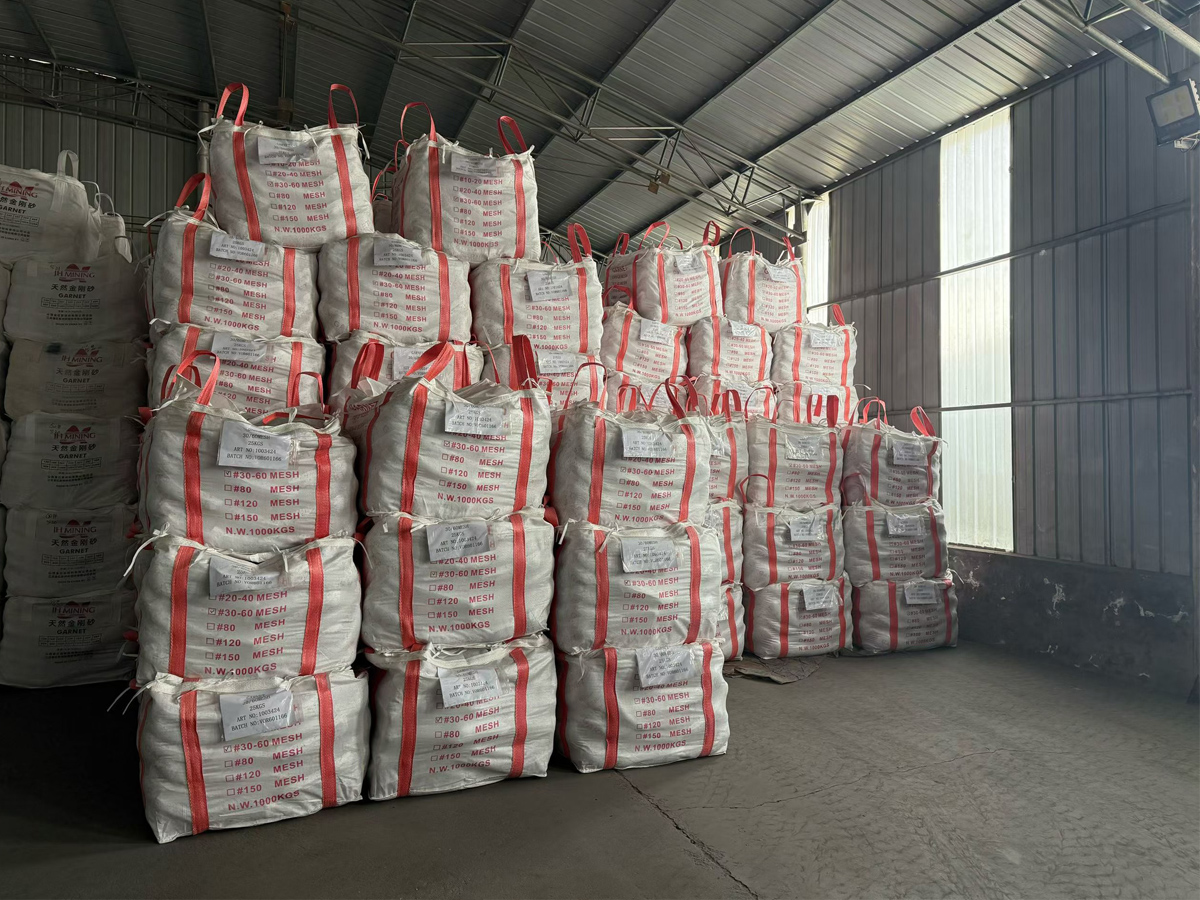
Bulk purchasing garnet abrasive for sandblasting or waterjet cutting needs careful checks beyond price. Reliable suppliers provide consistent grading, test documents, flexible packing and clear shipping terms. This checklist helps importers and contractors avoid quality issues and delivery delays. Documents to Request Before Bulk Order TDS (Technical Data Sheet) including hardness, specific gravity and nominal mesh range. Sieve analysis report of the batch to verify grain distribution. Soluble chloride and free silica test certificates, especially for marine and immersion coating projects. Sample for trial test before a full container shipment. Clarify your requirements clearly: confirm application (blasting or waterjet), mesh grade, target surface profile, substrate type and project standard. Do not simply order “garnet grit” without grading confirmation. B24 (20–40), B60 (30–60), 80 mesh and 120 mesh have completely different performance. Common Export Packing Options 25 kg woven bags: easy manual handling, suitable for small workshops and trial orders. 1-ton jumbo bags (FIBC): popular for bulk container shipment, forklift loading, low packing cost. Palletized loading can be arranged for stable stacking and container loading. MOQ, Lead Time and Shipping Terms Factory direct bulk orders enjoy better price for full container load. We accept trial orders of small tonnage for new customers to test quality. Confirm production lead time, payment terms, Incoterms such as FOB and CIF, and destination port before confirming order. Sourcing garnet directly from factory brings stable batch quality, adjustable grading and full test support. Long-term buyers benefit from consistent specification and stable supply across repeated projects. Tell us your application, required mesh grade, order quantity and destination port, we will send a formal quotation, packing details and sample arrangement plan.
Garnet Blasting Media Cost: Consumption, Reuse & Savings
News 2026-10-29 50
Many buyers only compare the price per ton when selecting blasting abrasives. But the real project cost depends on consumption rate, reuse cycles, waste disposal cost, productivity and rework risk. Garnet can deliver better total economy even when its unit price is higher than slag. What Drives Blasting Cost Consumption per square meter: heavily rusted steel and coarse garnet usually consume more abrasive; clean new steel with light mill scale consumes much less. Reusability: inside blast rooms fitted with recovery and separation system, garnet can be reused multiple times, spreading the purchase cost over many cycles and lowering cost per finished square meter. Disposal cost: single-use slag generates large waste volume and high landfill fees; recyclable garnet reduces waste output. Productivity: garnet produces consistent profile and clean surface in fewer blast passes, saving working hours and labour cost. For open-air field blasting without recovery, garnet cannot be recycled. In this scenario, low unit-price slag may look attractive, but you still need to calculate dust control, site containment and rework risk. How to Estimate Your Blasting Cost Record steel rust condition and required cleanliness standard. Select garnet mesh matching target anchor profile. Run trial blasting to test actual consumption per m². Count reuse cycles if a recovery system is available. Add transport, disposal and labour cost for a full comparison. Cost saving tips: select the coarsest garnet that still meets profile requirement, maintain blast recovery equipment, and screen recycled garnet regularly to remove fine dust. Stable garnet quality reduces unexpected rework on large contracts. Contact us for bulk pricing and consumption estimation based on your project size and steel condition.
Garnet Blasting Media: Silica-Free, Low Dust & Recyclable
News 2026-10-29 52
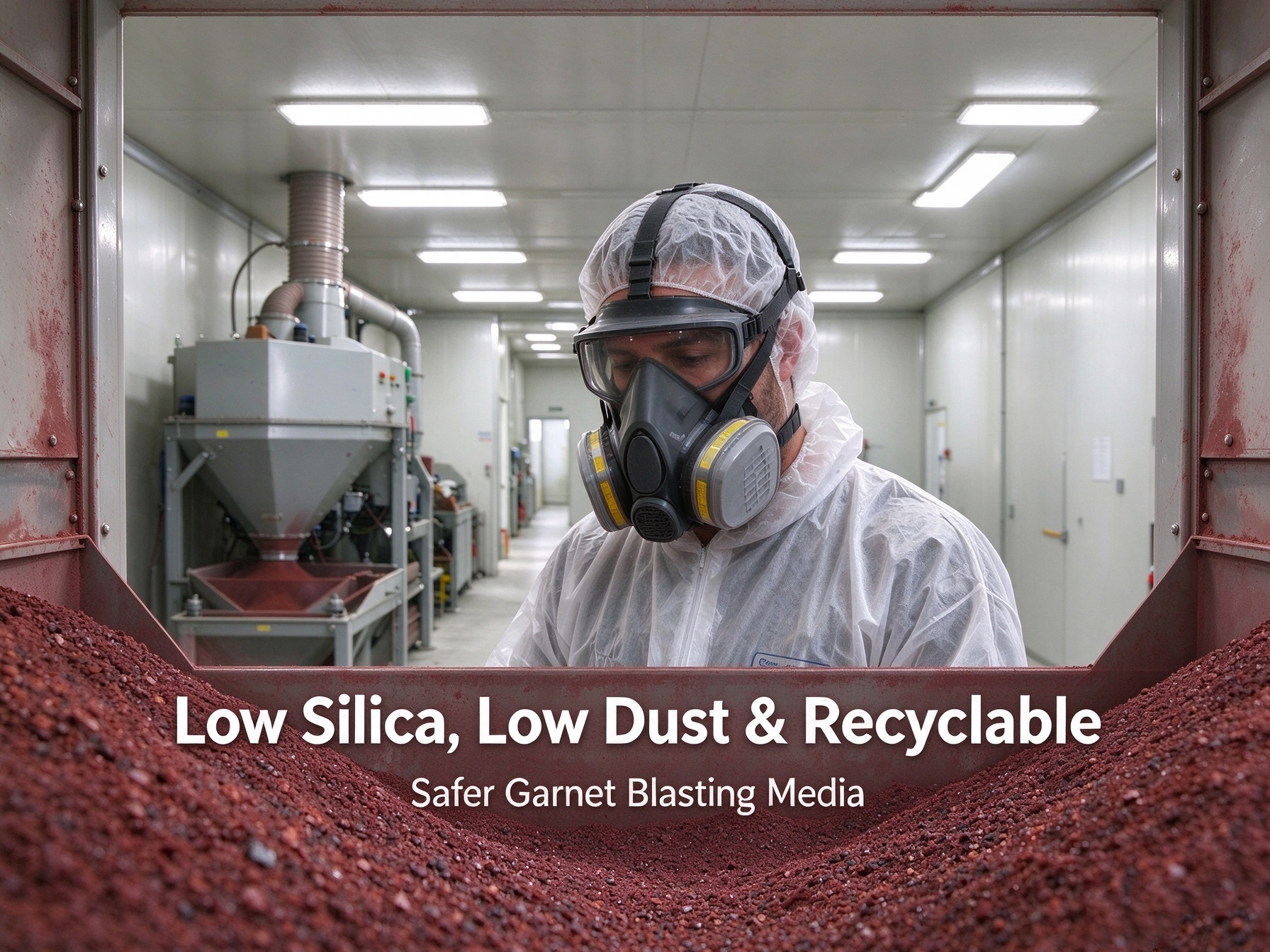
Worker safety, dust control and waste management are major concerns for blasting operators worldwide. Garnet abrasive stands out as a responsible blasting media with three core advantages: low free crystalline silica, low dust generation and recyclability with blast recovery systems. Low Free Crystalline Silica Traditional silica sand carries high free silica content. Long-term inhalation of silica dust leads to silicosis, an irreversible lung disease. High-quality industrial garnet contains very little free crystalline silica, so it complies with strict workplace exposure rules in Europe, USA, Australia and many marine projects. It is the primary compliant replacement for silica sand blasting. Low Dust on Site Garnet is tougher than slag abrasives. When garnet grains hit steel surface, they cut rust and coating instead of shattering into fine dust. Lower dust improves visibility for blasters, reduces dust collector loading and lowers cleaning work around blast sites. This benefit is especially valuable inside blast rooms and confined tank spaces. Reusability and Waste With blast recovery, air wash and screening equipment, garnet can be recycled for 3–5 blasting cycles. Worn fine particles are separated out, and intact sharp grains go back to blasting pot. Reuse cuts fresh garnet purchase volume and reduces spent abrasive waste. For open blasting without recovery, garnet is still non-toxic inert mineral and easier for disposal than hazardous slag waste. Even with safe garnet, standard blasting safety procedures still apply. Operators must wear proper PPE, maintain ventilation and follow site safety rules. Contact us for TDS, silica test report and safety data sheet of our garnet blasting media.
Surface Prep Standards Sa2.5/Sa3 and Garnet Profile Guide
News 2026-10-29 45
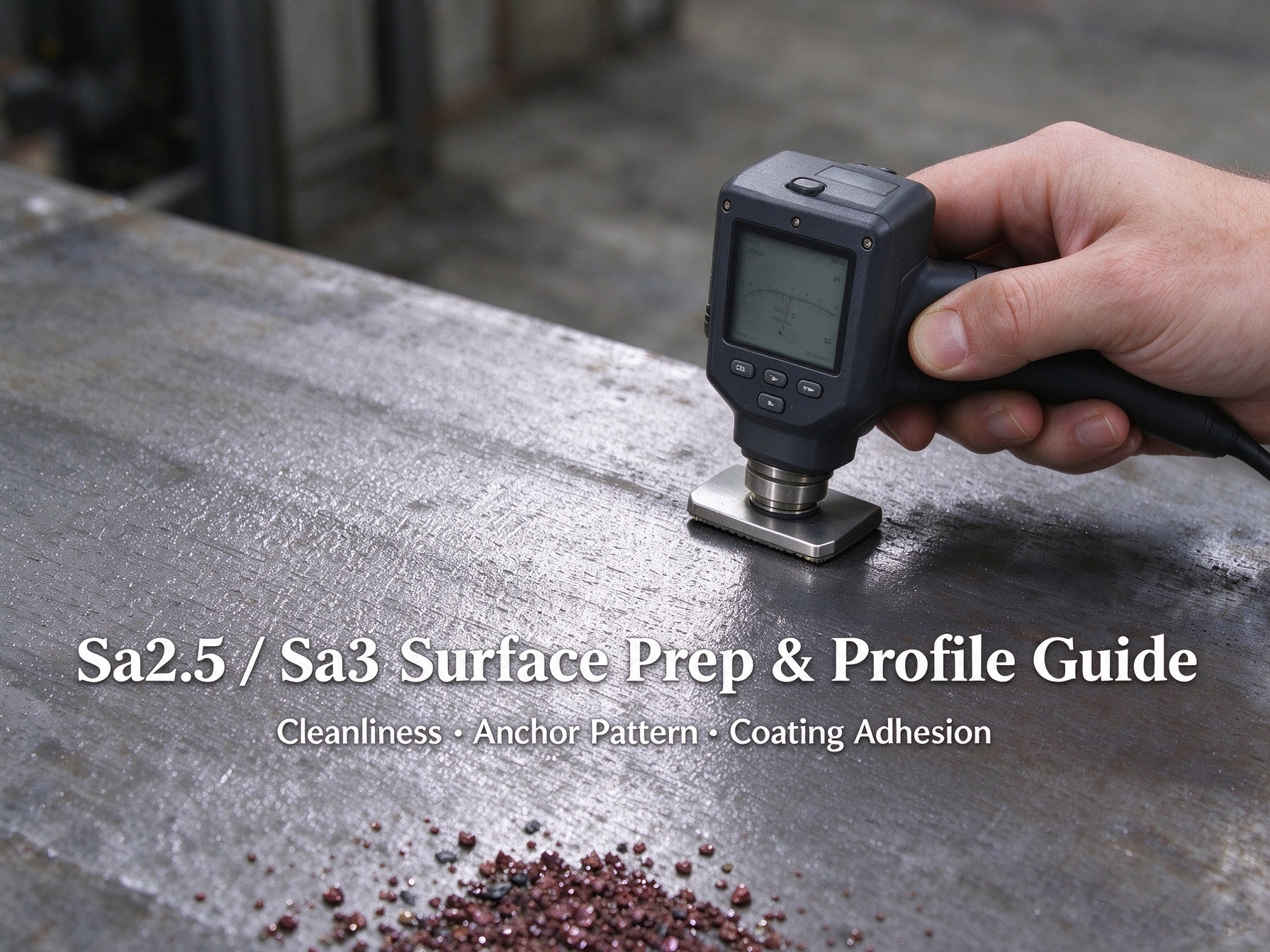
Coating failure often comes from poor surface preparation rather than bad paint quality. ISO 8501-1 defines blast cleaning grades, and anchor profile depth determines coating adhesion. Choosing correct garnet mesh and blast pressure helps contractors hit Sa2.5 and Sa3 specifications reliably. Sa 2.5 (Near-White Metal) Sa 2.5 (very thorough blast cleaning / near-white metal) is the most widely specified grade for industrial anti-corrosion coating. The steel surface is free from oil, grease, rust, mill scale and old coating; only faint stains and shadows are allowed on less than 5% of the area. Most structural steel, pipeline and marine coating projects require Sa2.5. Sa 3 (White Metal) Sa 3 (white metal blast cleaning) is the highest cleanliness level. 100% of visible contaminants must be removed. Sa3 is specified for immersion service, internal tank lining, severe corrosion environments and critical process equipment. Anchor Profile Anchor profile (Rz) is the microscopic roughness on blasted steel. If profile is too shallow, coating cannot grip firmly and peels off. If profile is too deep, coating peaks stay uncovered and become corrosion starting points. Coating manufacturer datasheets always state a target profile range in microns. Matching Garnet Grade to the Spec 20–40 mesh: creates deeper anchor profile for heavy rust and high-performance coating systems 30–60 mesh: balanced profile for Sa2.5 general steel preparation 80 mesh: shallow fine profile for light cleaning and thin coating Blast pressure, nozzle distance and abrasive flow also affect final profile. After blasting, inspect both cleanliness grade and profile with surface profile gauge before painting. Always follow the project specification and coating sheet. Share your required Sa grade and target profile range, we will advise matching garnet grade and blasting parameters.
Waterjet Cutting Garnet: Mesh, Consumption & Cost Guide
News 2026-10-29 35
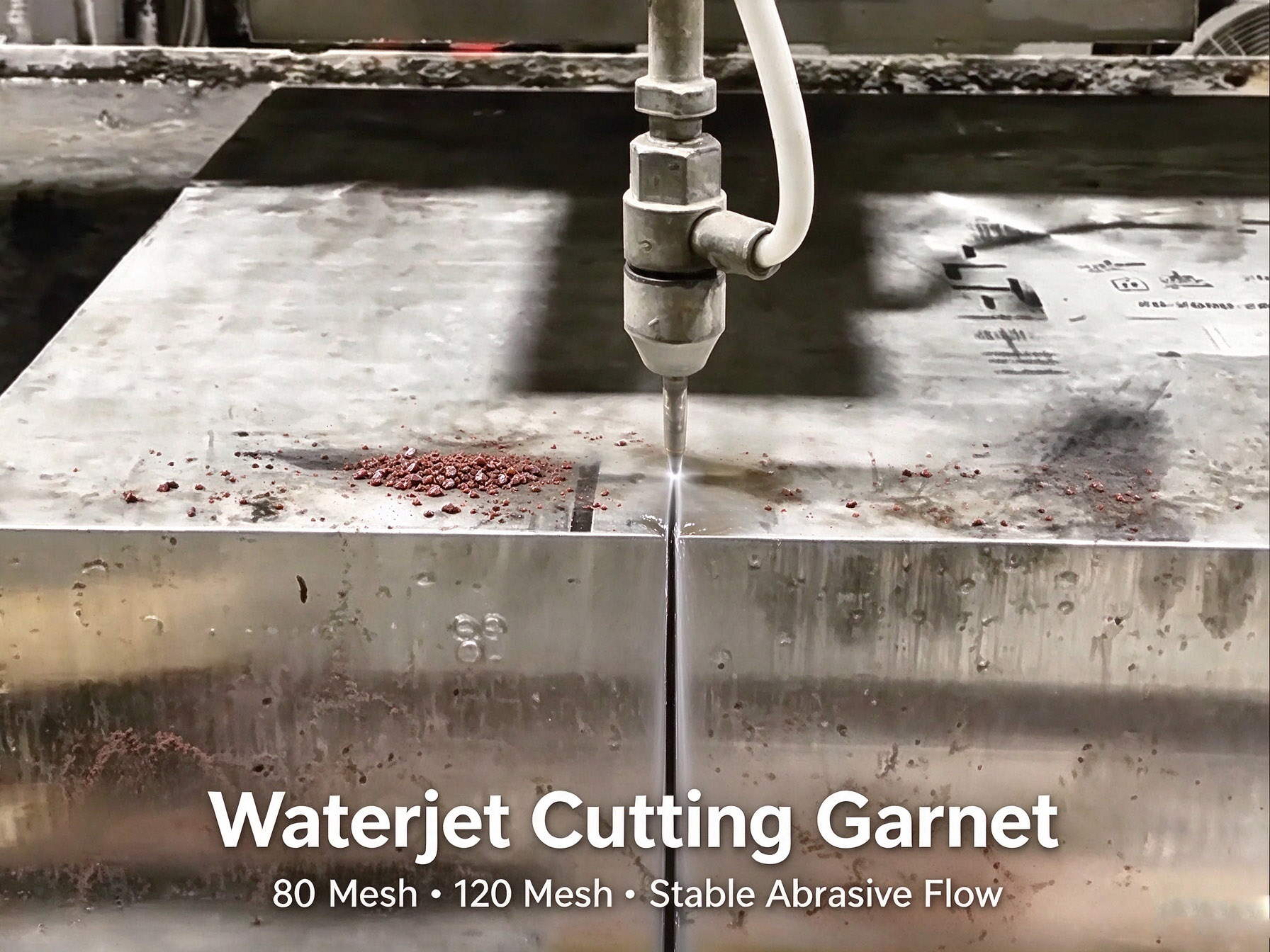
Pure high-pressure water cannot cut metal, stone, glass or composite materials. Abrasive waterjet machines rely on garnet grit as the cutting medium. Waterjet-grade garnet must be clean, well-graded, free of excessive fine powder and free-flowing to avoid clogging the hopper, orifice and mixing tube. 80 Mesh vs 120 Mesh 80 mesh garnet is the universal standard. It provides excellent cutting speed and acceptable edge finish for carbon steel, stainless steel, aluminium, granite and most common stone. Most waterjet workshops keep 80 mesh garnet as stock for daily production. 120 mesh garnet is selected for precision cutting, thin sheets and parts requiring smooth edge quality. It delivers finer surface finish, but cutting speed is slower, and it usually consumes more garnet per cutting length. Abrasive consumption is the largest variable operating cost for waterjet shops. Consumption rate changes with pump pressure, orifice size, mixing tube diameter, material thickness and cutting speed. Thicker metal needs higher garnet flow rate. Thin precision parts can run lower flow to save cost. Good storage management is important for waterjet garnet. Garnet must be kept dry and sealed. Moisture causes caking and blockage inside the abrasive delivery line, which stops cutting and damages consumable parts. Regular inspection of mixing tube wear also helps stabilize cutting quality. Simple cost optimization tips: select the coarsest mesh that meets your edge finish requirement, set the minimal abrasive flow that still achieves full cutting, and store garnet in dry warehouse. We supply bulk waterjet garnet of 80 mesh and 120 mesh. Tell us your machine model and common cutting materials, we will give suitable grade suggestion.
Garnet Sand for Steel Structures, Tanks, Pipes & Bridges
News 2026-10-29 34
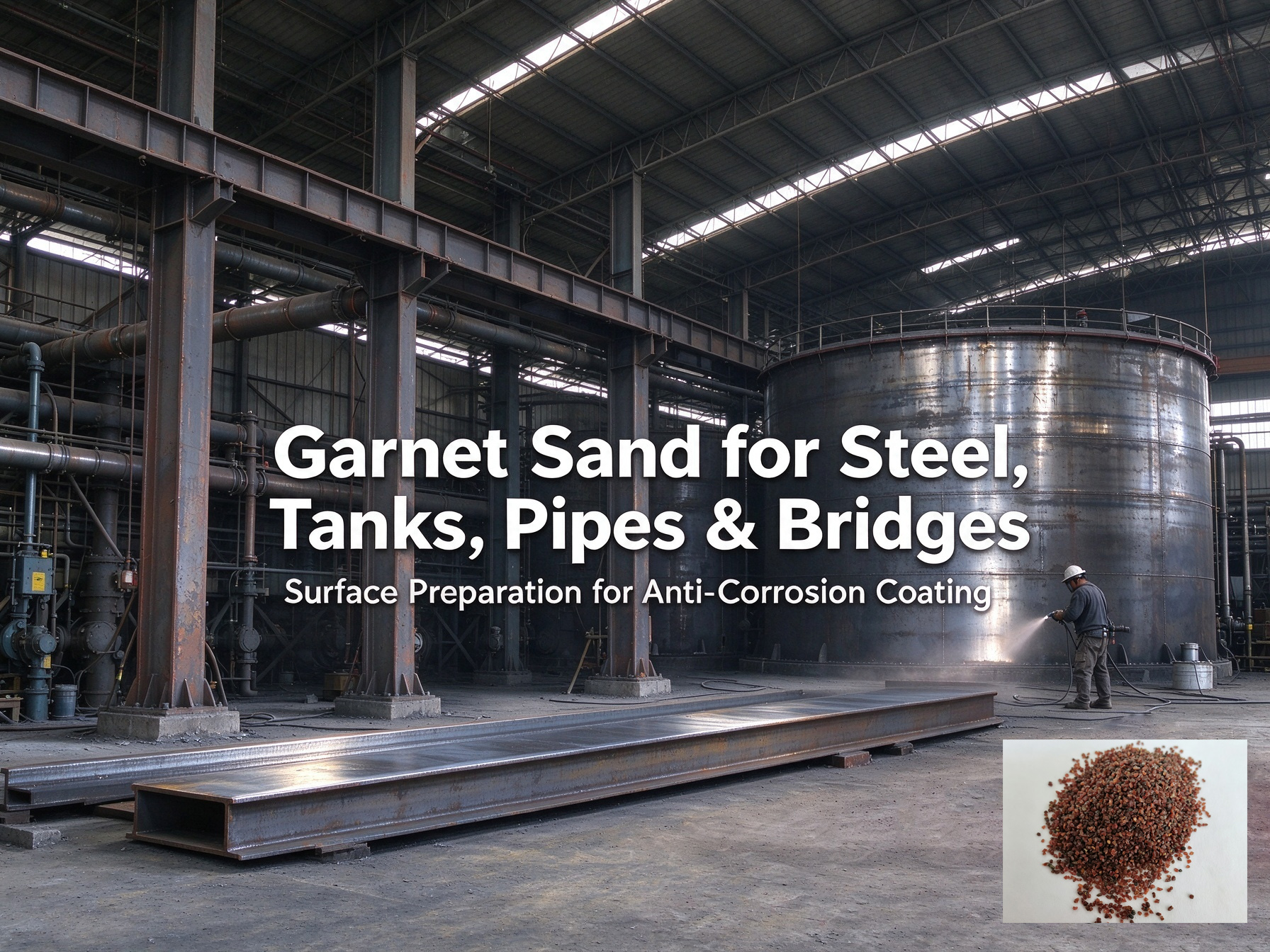
Structural steel, storage tanks, oil and gas pipelines and bridges form the backbone of industrial infrastructure. Long-term anti-corrosion performance starts with high-quality surface blasting, and garnet sand is widely adopted by fabricators and field maintenance teams for these steel assets. Structural Steel and Fabrication Structural steel beams, columns and fabricated frames are commonly blasted in shop or on-site. B60 (30–60 mesh) garnet is the mainstream grade. It balances cleaning speed, profile uniformity and abrasive consumption, perfect for achieving Sa 2.5 cleanliness before epoxy or polyurethane coating. Storage Tanks Tank blasting has different needs for different zones. Tank bottom plates suffer heavy sediment corrosion and thick rust, so contractors choose coarser 20–40 mesh garnet to remove heavy scale and old lining. Tank shell walls and roofs normally use 30–60 mesh garnet for a controlled anchor profile. Low-chloride garnet is essential for tanks holding water, crude oil and chemical media. Oil and Gas Pipelines Pipeline external and internal surface preparation before FBE, 3LPE or other coating systems calls for uniform cleanliness and profile. Garnet produces repeatable anchor profile along long pipe joints and straight sections, avoiding uneven coating thickness and premature failure. Bridges and Infrastructure Bridges and outdoor steel infrastructure are exposed to rain, humidity and atmospheric corrosion. Garnet efficiently removes weathered rust and aged paint during maintenance blasting, providing a solid base for new protective coating. Recommended Grades at a Glance 20–40 mesh: tank bottoms, thick steel plates, heavy rust 30–60 mesh: structural steel, tank walls, pipelines, bridges 80 mesh: light cleaning and fine profile finishing Share your coating specification and steel condition, we will recommend suitable garnet grade for your blasting project.
Garnet Blasting for Ships, Ballast Tanks & Offshore Structures
News 2026-10-29 31
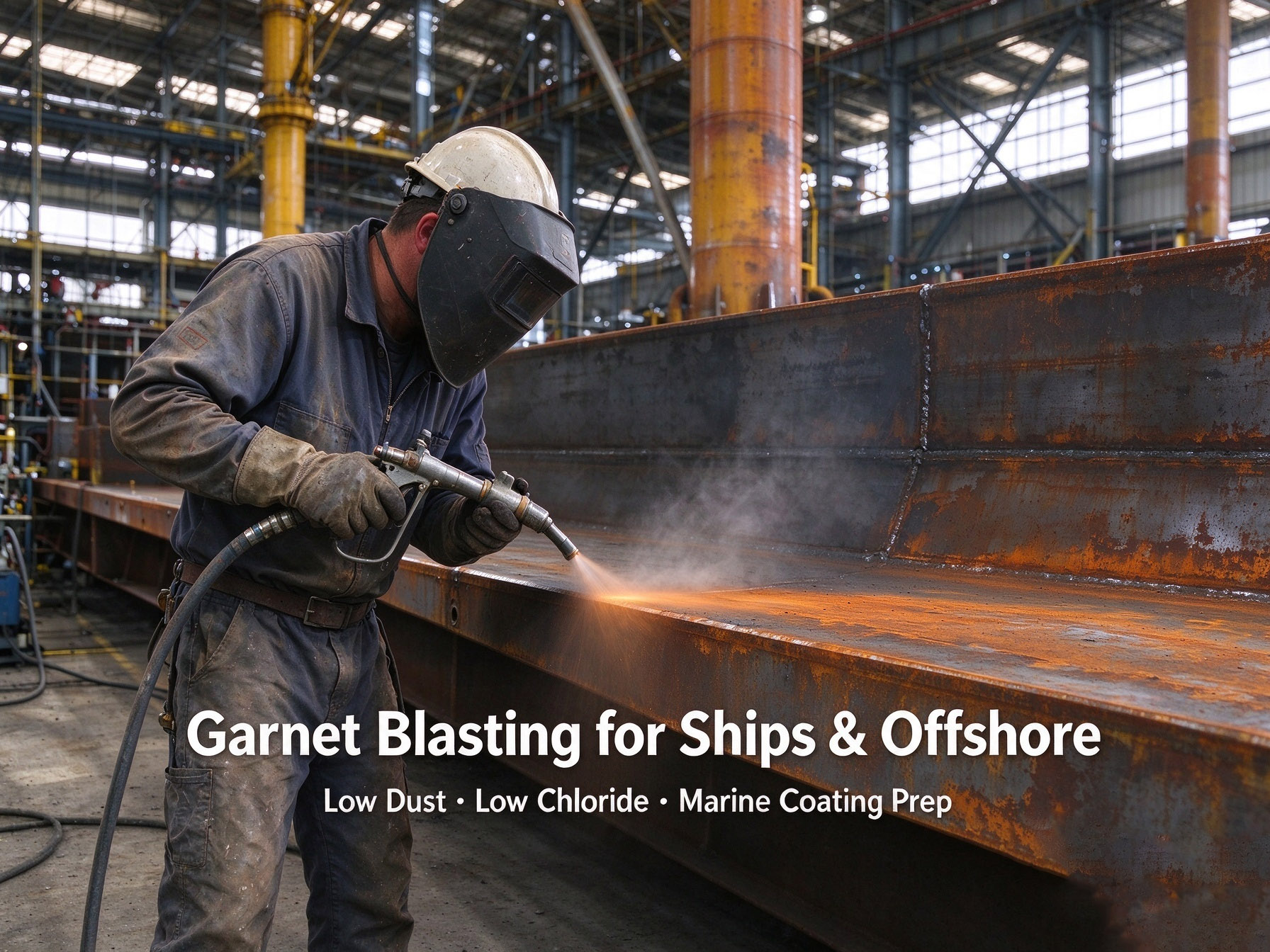
Marine and offshore surface preparation has stricter requirements than regular steel blasting. IMO PSPC, NORSOK and other marine standards set tight limits on surface cleanliness, soluble salt contamination and anchor profile. Garnet has become the preferred abrasive for ship hulls, ballast tanks, offshore platforms and marine pipe racks for these key reasons. Ship Hull Exterior Blasting Hull preparation before anti-fouling and protective coating requires clean steel and a controlled anchor profile. Garnet’s angular grains clean steel quickly and leave a consistent anchor profile, helping marine coatings resist saltwater erosion and extend service life. Ballast Tanks and Confined Spaces Ballast tank blasting is one of the most demanding blasting jobs. Ballast tanks are enclosed, poorly ventilated confined spaces. High dust from slag will reduce visibility and increase respiratory risk for blasters. Garnet generates far less airborne dust, which improves safety inside tanks. Low soluble chloride content is another critical feature: high chloride abrasive leaves salt residue under lining and causes early coating blistering and corrosion failure. Offshore Platforms and Decking Offshore platform decks, jacket structures and process skids operate in constant salt spray and wind. Garnet maintains stable impact force under field blasting conditions, delivering Sa 2.5 or Sa 3 cleanliness as required by coating specs. For marine projects, always confirm the required surface standard, maximum allowable salt level and target profile before selecting garnet grade. B24 20–40 mesh is used for heavy fouling and thick coating removal, while B60 30–60 mesh is standard for most hull and tank wall blasting. We supply marine-grade garnet with chloride and silica test reports. Send your vessel or offshore specification to get matching garnet grade and packing solution.
Garnet vs Coal Slag vs Silica Sand: Abrasive Guide
News 2026-10-29 28
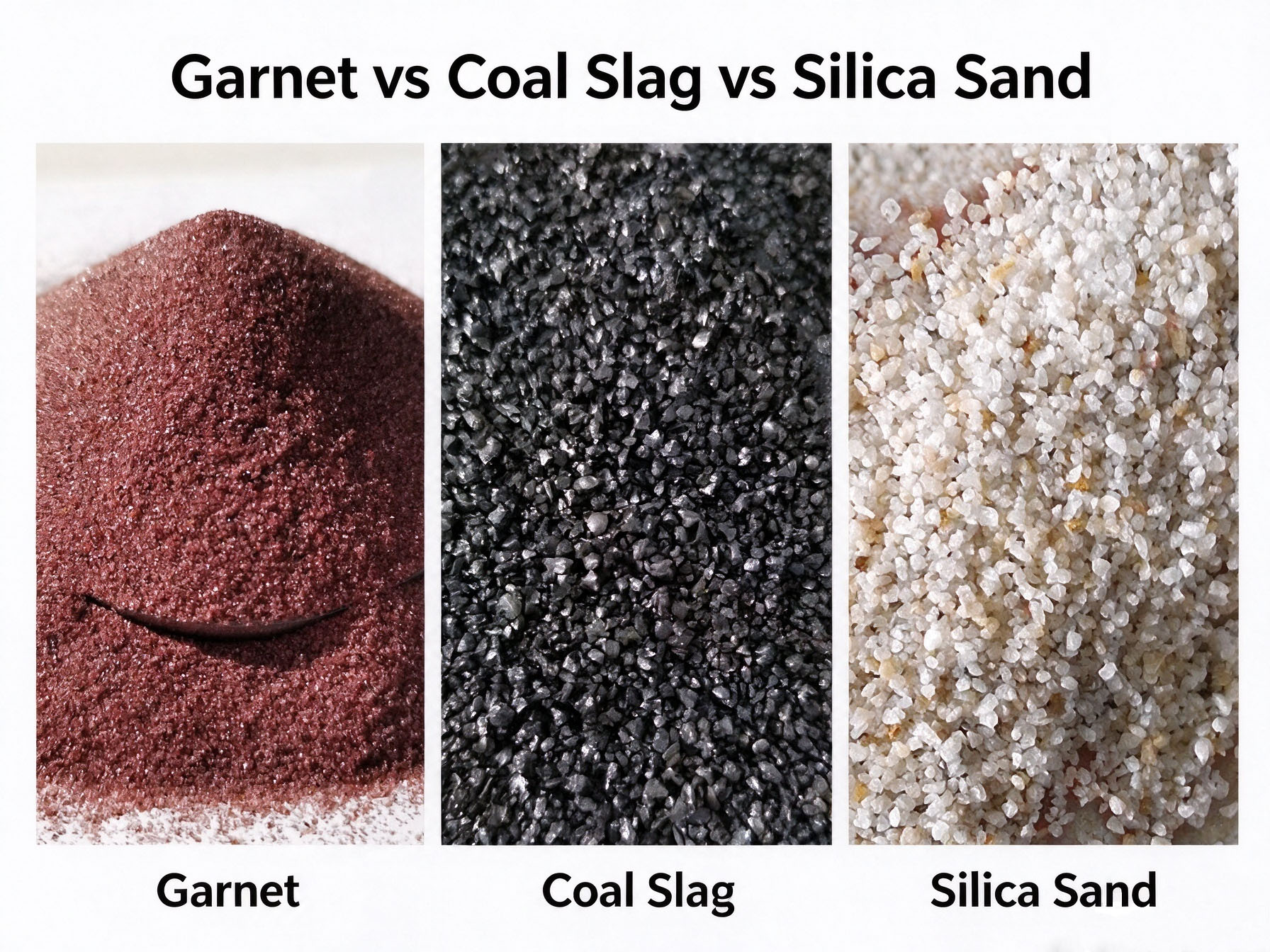
Industrial blasting contractors often compare garnet, coal slag, copper slag and silica sand when sourcing blasting media. The decision should not be based only on price per ton. You need to evaluate dust level, free silica risk, reusability, surface profile quality, waste disposal cost and site regulation together. Comparison Item Garnet Coal & Copper Slag Silica Sand Mohs Hardness 7.5–8 6–7 Around 7 Dust Generation Low Medium to high Very high Free Crystalline Silica Very low Low-medium Extremely high Reusable Cycles 3–5 cycles with recovery system Mostly single-use Single-use Surface Profile Uniform and stable Irregular, easy embedment Uneven Waste Disposal Simple, non-hazardous in most areas High waste volume, extra disposal cost Strictly restricted in many countries Garnet’s biggest advantages are low dust and low free silica. Compared with slag abrasives, garnet breaks less during impact, so less fine dust floats in the blast cabin or confined space. Operators keep better visibility and lower health risk. With blast recovery equipment, garnet can be recycled multiple times, which greatly reduces the total consumption and waste output. Coal slag and copper slag still attract buyers because of low upfront price for large open blasting. But slag is brittle, creates much more dust and cannot be reused normally. Silica sand is banned or heavily limited in most professional markets, because high free silica causes silicosis and permanent lung injury for workers. Total cost of ownership matters more than bag price. A cheaper single-use abrasive may cost more when you add consumption, disposal, ventilation and rework cost. If you work in shipyards, offshore or enclosed blast rooms, garnet is usually the safer and more compliant choice. Contact us for a side-by-side recommendation based on your blasting site, budget and coating specification.
Choosing the Right Garnet Grit Mesh for Sandblasting
News 2026-10-29 33
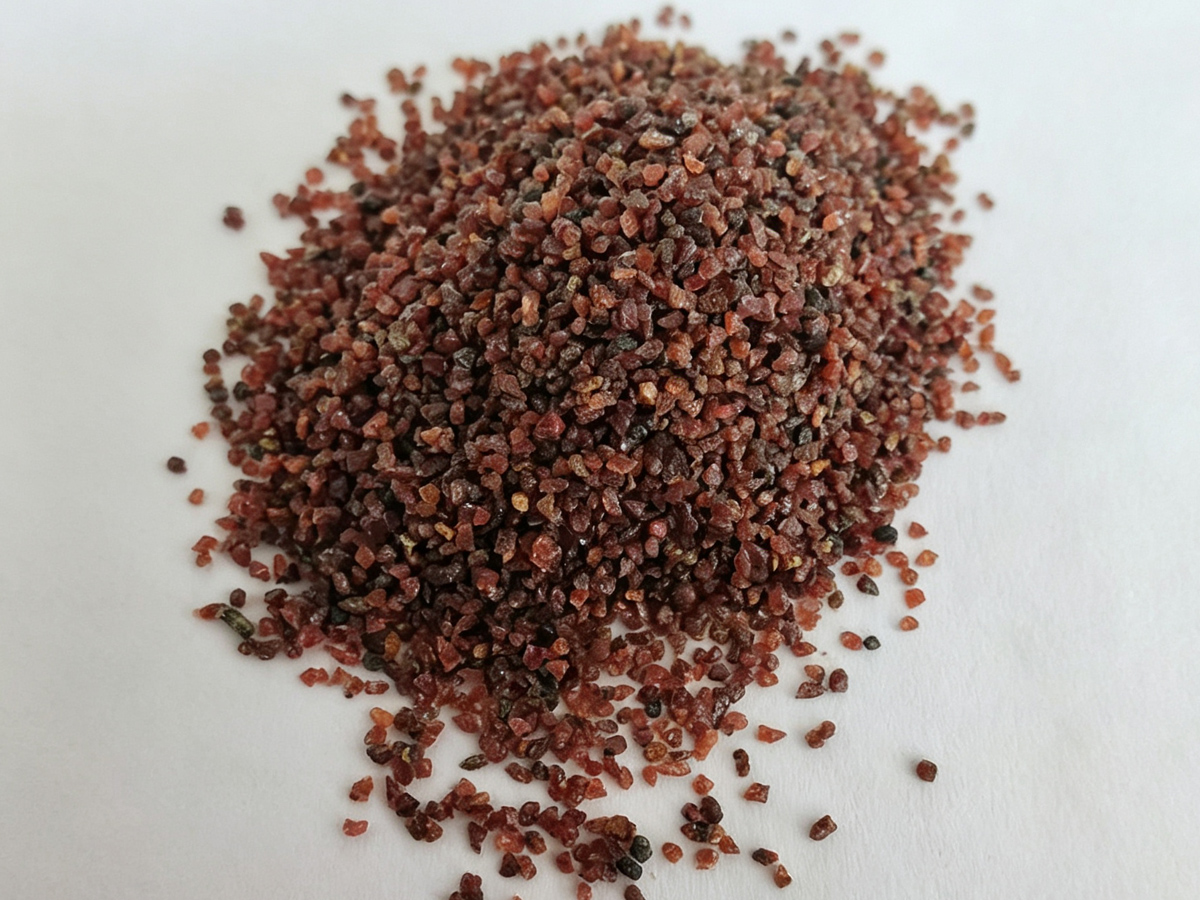
Selecting the correct garnet grit mesh is the most important step to get consistent anchor profile, fast cleaning speed and controlled abrasive consumption in sandblasting. A wrong grit choice will either leave residual rust and mill scale or create an overly rough surface that wastes coating material. This guide matches garnet mesh grades with common blasting scenarios for steel surface preparation. Mesh size directly controls the depth of anchor profile. Coarser garnet grains deliver deeper roughness for heavy corrosion, while finer grains create a shallow and uniform profile for thin coating systems. Many coating datasheets specify a required Rz profile range in microns, so the garnet grade must be selected to meet that specification. Grade Mesh Range Best Application B24 20–40 mesh Heavy rust, thick steel plates, tank bottoms, wind tower components B60 30–60 mesh General structural steel, tank walls, ship decks, pipeline outer surface 80 mesh 70–90 mesh Light rust removal, fine finishing, thin paint and topcoat preparation Follow these simple selection rules for daily blasting work. For heavy rust and thick mill scale on carbon steel, choose 20–40 mesh garnet to cut through contamination efficiently. For most routine industrial blasting jobs, 30–60 mesh B60 garnet remains the universal standard, balancing cleaning speed, profile quality and consumption. If you only need light cleaning or preparing surface for thin coating, 80 mesh garnet provides a smooth, shallow anchor profile. Blast pressure should also be adjusted together with grit size. Coarse garnet works well under standard nozzle pressure, while finer garnet needs slightly lower pressure to avoid over-etching the steel substrate. Always run a small test patch on your steel before starting large-scale blasting projects. If you are not sure which garnet mesh suits your project, share your steel condition, coating type and target profile, and we will recommend the proper grade and blasting parameters.
Garnet Sand Explained: Properties, Grades & Main Uses
News 2026-10-29 36
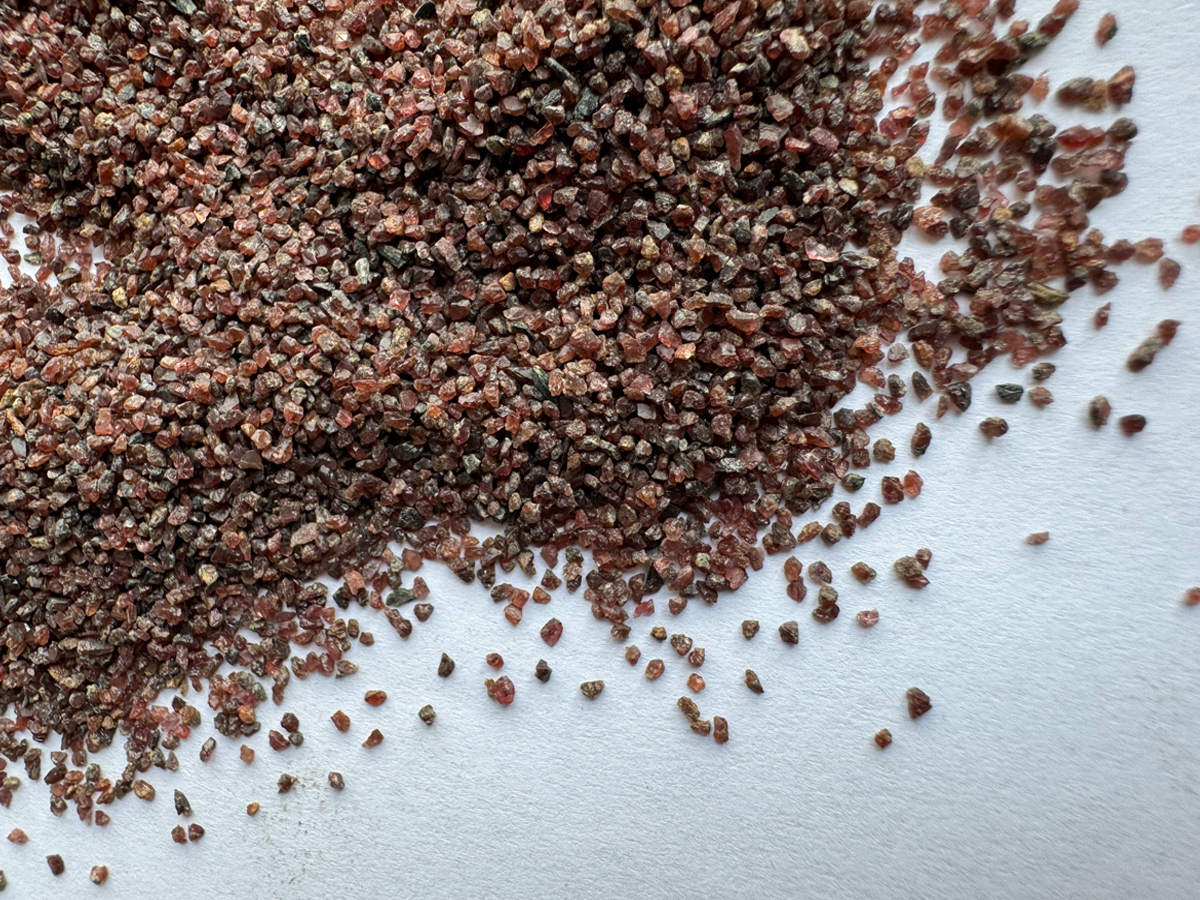
What Is Garnet Sand? Industrial garnet sand used for abrasive work is almost always almandine garnet, a natural iron-aluminium silicate mineral. It is mined from garnet-bearing rock deposits, crushed, washed and screened into consistent grain sizes for sandblasting, waterjet cutting and water filtration. Unlike manufactured abrasives, garnet is a naturally hard mineral with sharp, angular grain edges that cut rust, mill scale and old coating instead of simply pounding the surface. A common misunderstanding: garnet sand is not the red garnet gemstone. Industrial garnet is mined in bulk and processed strictly for physical abrasive performance rather than jewellery quality. Key Properties of Garnet Abrasive Mohs hardness 7.5–8: removes heavy rust and old paint efficiently, yet can be recycled several times in a recovery system. Specific gravity 3.9–4.1 g/cm³: high density delivers strong impact force and a uniform anchor profile for coating. Low free crystalline silica: a safer workplace choice than traditional silica sand. Low soluble chloride: suitable for marine and anti-corrosion projects. Angular grain shape: faster cleaning than round media such as glass beads. Three Main Product Families Garnet blasting media — ship hulls, offshore wind towers, tanks, pipelines, bridges and structural steel. Standard grades B24 (20–40 mesh) for heavy rust and B60 (30–60 mesh) for general steel preparation. Waterjet cutting garnet — 80 mesh and 120 mesh for abrasive waterjet cutting of metal, stone, glass and composites. Garnet filter media — a stable support and filtration layer for wastewater treatment, RO pre-treatment and well water purification. Why Buyers Choose Garnet Garnet combines stable grain size, low dust, consistent surface profile and reusable performance. Custom mesh sizes are available to match your base material, target roughness and blasting method. Need a spec sheet, sieve test report or free sample? Send us your requirements and we will recommend the right grade for your project.