Garnet vs Coal Slag vs Silica Sand: Abrasive Guide
News 2026-10-29
Industrial blasting contractors often compare garnet, coal slag, copper slag and silica sand when sourcing blasting media. The decision should not be based only on price per ton. You need to evaluate dust level, free silica risk, reusability, surface profile quality, waste disposal cost and site regulation together.
| Comparison Item | Garnet | Coal & Copper Slag | Silica Sand |
|---|---|---|---|
| Mohs Hardness | 7.5–8 | 6–7 | Around 7 |
| Dust Generation | Low | Medium to high | Very high |
| Free Crystalline Silica | Very low | Low-medium | Extremely high |
| Reusable Cycles | 3–5 cycles with recovery system | Mostly single-use | Single-use |
| Surface Profile | Uniform and stable | Irregular, easy embedment | Uneven |
| Waste Disposal | Simple, non-hazardous in most areas | High waste volume, extra disposal cost | Strictly restricted in many countries |
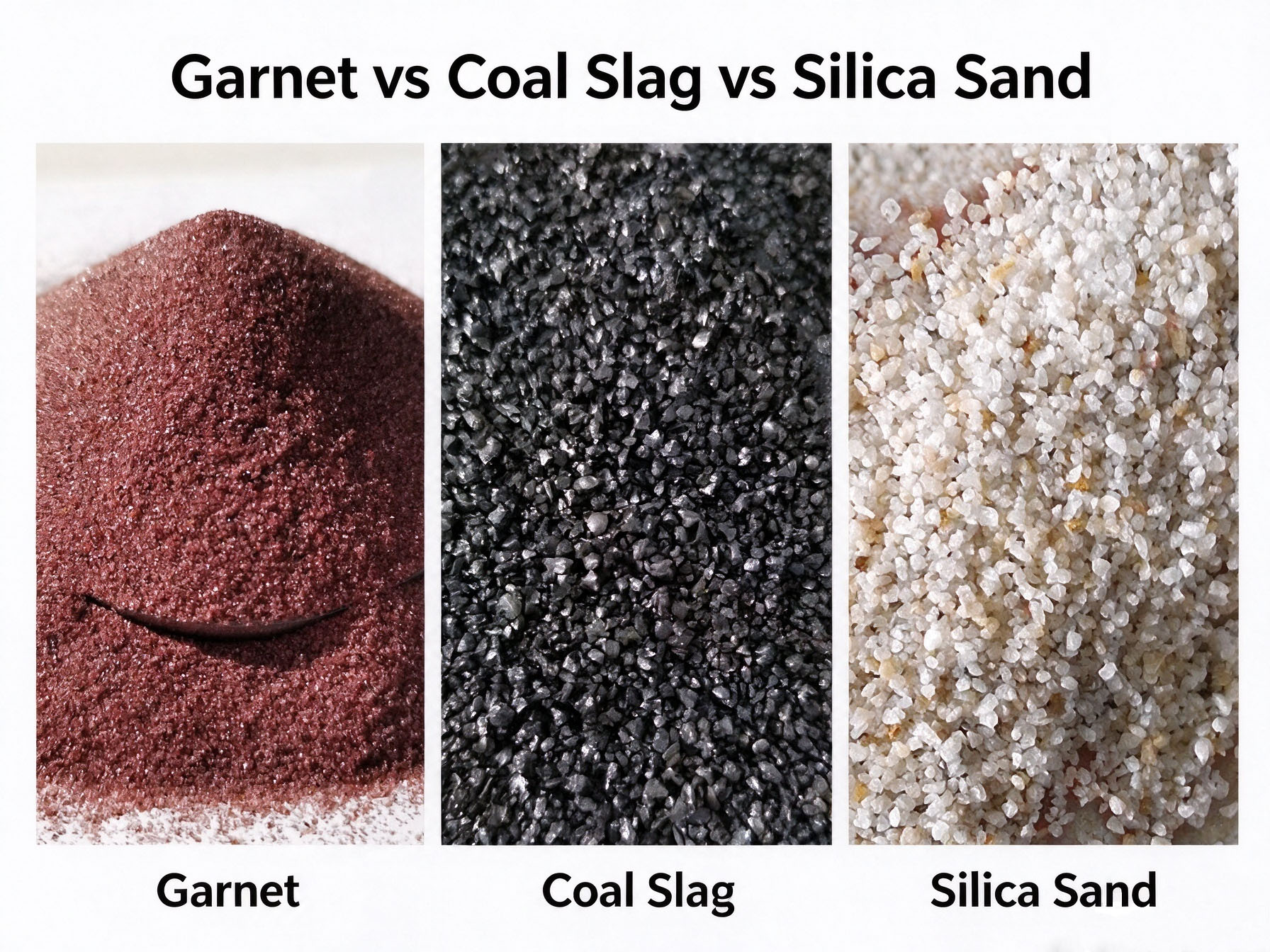
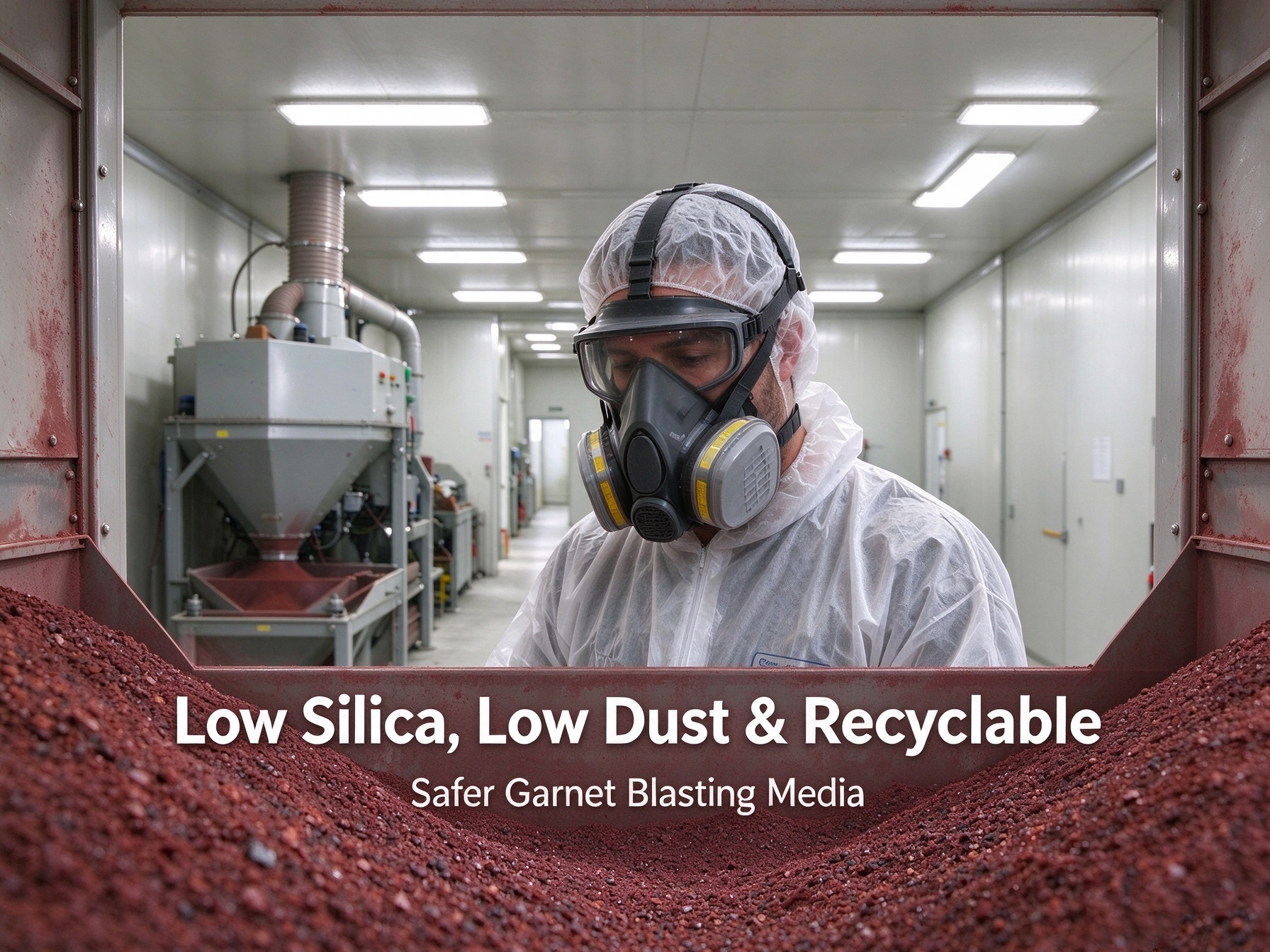
Garnet’s biggest advantages are low dust and low free silica. Compared with slag abrasives, garnet breaks less during impact, so less fine dust floats in the blast cabin or confined space. Operators keep better visibility and lower health risk. With blast recovery equipment, garnet can be recycled multiple times, which greatly reduces the total consumption and waste output.
Coal slag and copper slag still attract buyers because of low upfront price for large open blasting. But slag is brittle, creates much more dust and cannot be reused normally. Silica sand is banned or heavily limited in most professional markets, because high free silica causes silicosis and permanent lung injury for workers.
Total cost of ownership matters more than bag price. A cheaper single-use abrasive may cost more when you add consumption, disposal, ventilation and rework cost. If you work in shipyards, offshore or enclosed blast rooms, garnet is usually the safer and more compliant choice.
Contact us for a side-by-side recommendation based on your blasting site, budget and coating specification.