Surface Prep Standards Sa2.5/Sa3 and Garnet Profile Guide
News 2026-10-29
Coating failure often comes from poor surface preparation rather than bad paint quality. ISO 8501-1 defines blast cleaning grades, and anchor profile depth determines coating adhesion. Choosing correct garnet mesh and blast pressure helps contractors hit Sa2.5 and Sa3 specifications reliably.
Sa 2.5 (Near-White Metal)
Sa 2.5 (very thorough blast cleaning / near-white metal) is the most widely specified grade for industrial anti-corrosion coating. The steel surface is free from oil, grease, rust, mill scale and old coating; only faint stains and shadows are allowed on less than 5% of the area. Most structural steel, pipeline and marine coating projects require Sa2.5.
Sa 3 (White Metal)
Sa 3 (white metal blast cleaning) is the highest cleanliness level. 100% of visible contaminants must be removed. Sa3 is specified for immersion service, internal tank lining, severe corrosion environments and critical process equipment.
Anchor Profile
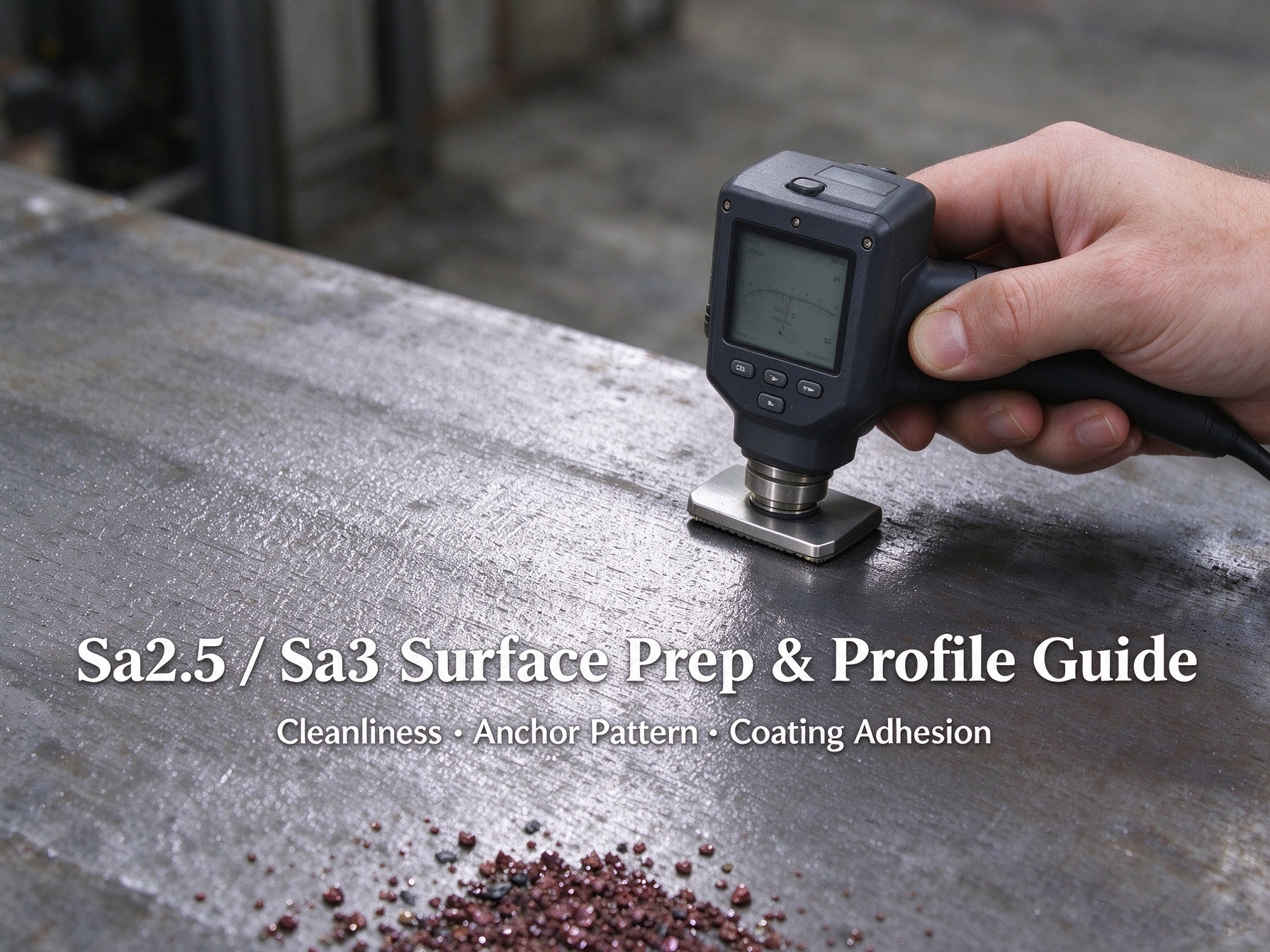
Anchor profile (Rz) is the microscopic roughness on blasted steel. If profile is too shallow, coating cannot grip firmly and peels off. If profile is too deep, coating peaks stay uncovered and become corrosion starting points. Coating manufacturer datasheets always state a target profile range in microns.
Matching Garnet Grade to the Spec
- 20–40 mesh: creates deeper anchor profile for heavy rust and high-performance coating systems
- 30–60 mesh: balanced profile for Sa2.5 general steel preparation
- 80 mesh: shallow fine profile for light cleaning and thin coating
Blast pressure, nozzle distance and abrasive flow also affect final profile. After blasting, inspect both cleanliness grade and profile with surface profile gauge before painting. Always follow the project specification and coating sheet.
Share your required Sa grade and target profile range, we will advise matching garnet grade and blasting parameters.