Garnet Blasting for Ships, Ballast Tanks & Offshore Structures
News 2026-10-29
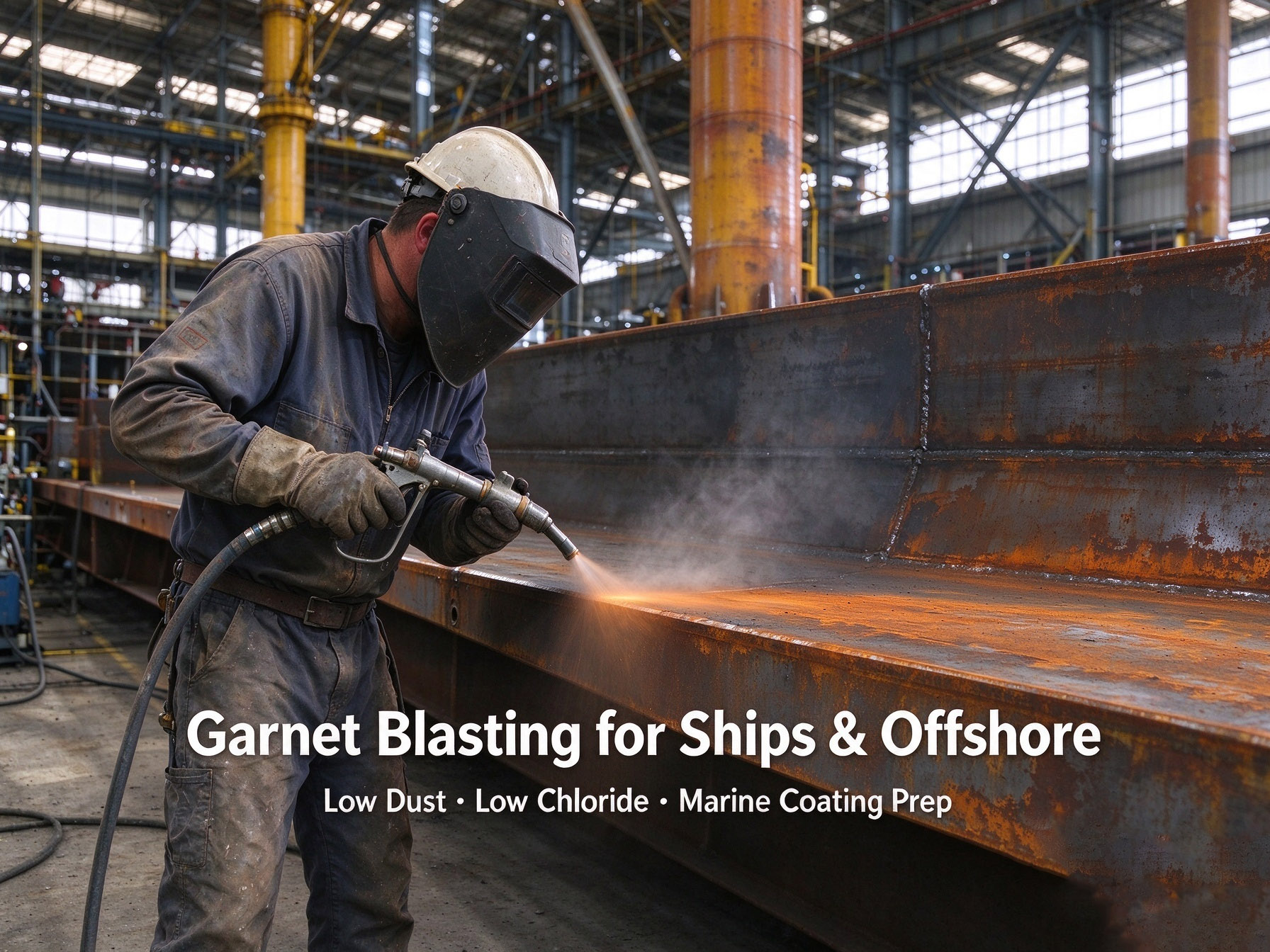
Marine and offshore surface preparation has stricter requirements than regular steel blasting. IMO PSPC, NORSOK and other marine standards set tight limits on surface cleanliness, soluble salt contamination and anchor profile. Garnet has become the preferred abrasive for ship hulls, ballast tanks, offshore platforms and marine pipe racks for these key reasons.
Ship Hull Exterior Blasting
Hull preparation before anti-fouling and protective coating requires clean steel and a controlled anchor profile. Garnet’s angular grains clean steel quickly and leave a consistent anchor profile, helping marine coatings resist saltwater erosion and extend service life.
Ballast Tanks and Confined Spaces
Ballast tank blasting is one of the most demanding blasting jobs. Ballast tanks are enclosed, poorly ventilated confined spaces. High dust from slag will reduce visibility and increase respiratory risk for blasters. Garnet generates far less airborne dust, which improves safety inside tanks. Low soluble chloride content is another critical feature: high chloride abrasive leaves salt residue under lining and causes early coating blistering and corrosion failure.
Offshore Platforms and Decking
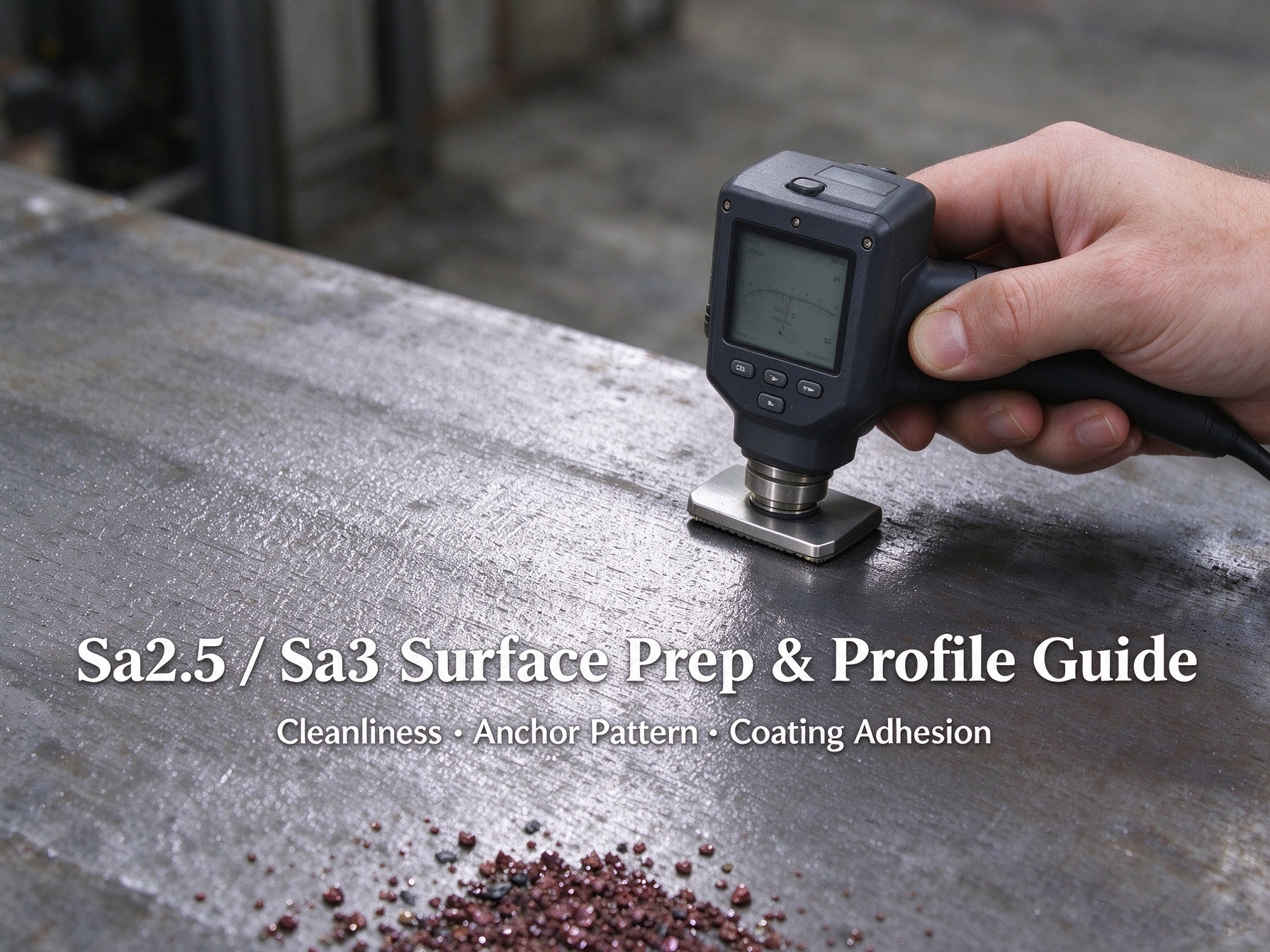
Offshore platform decks, jacket structures and process skids operate in constant salt spray and wind. Garnet maintains stable impact force under field blasting conditions, delivering Sa 2.5 or Sa 3 cleanliness as required by coating specs.
For marine projects, always confirm the required surface standard, maximum allowable salt level and target profile before selecting garnet grade. B24 20–40 mesh is used for heavy fouling and thick coating removal, while B60 30–60 mesh is standard for most hull and tank wall blasting.
We supply marine-grade garnet with chloride and silica test reports. Send your vessel or offshore specification to get matching garnet grade and packing solution.